
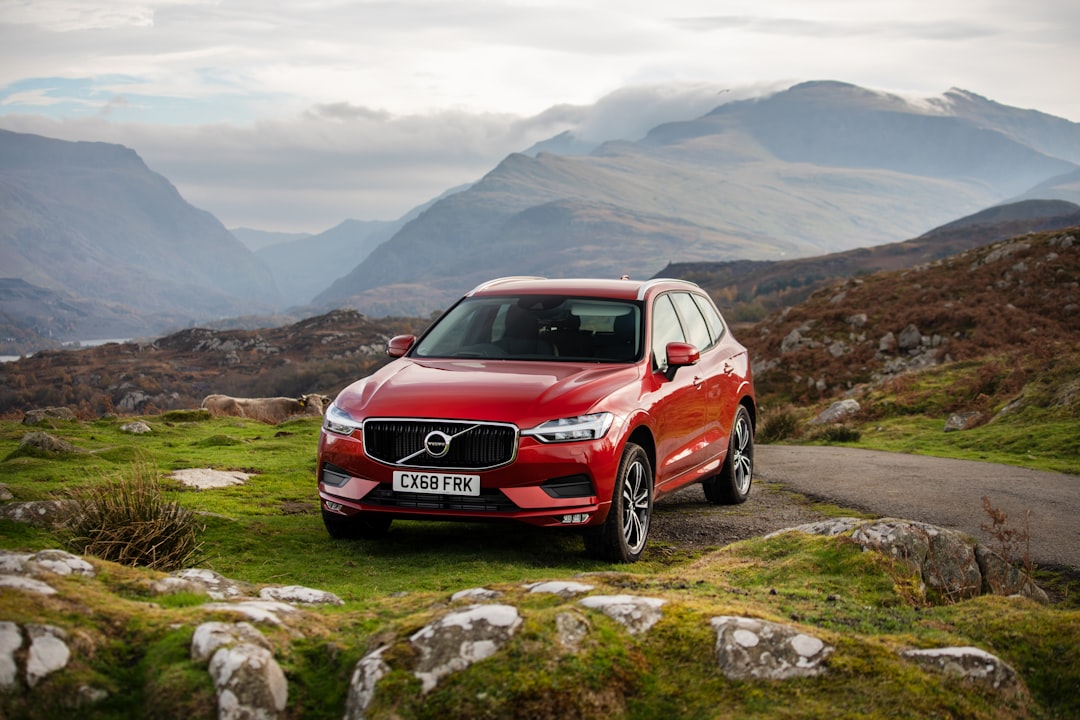
Volvo Cars is preparing the biggest product expansion in its 99 year history, with 13 completely new cars planned by the end of 2030. For American drivers, the strategy offers an early look at how the Swedish automaker plans to balance electric cars, hybrids and increasingly regional models in a rapidly changing global market.
Volvo is getting ready for a very busy few years.
The Gothenburg based automaker announced on September 17 that it plans to launch 13 all new cars between now and the end of 2030, describing the program as the largest and most ambitious product push in the company’s 99 year history.
According to Volvo Cars, seven of those models will be developed primarily for Western markets, while six will be designed around the needs of customers in China.
The announcement is not simply about adding more cars to the showroom. It represents a significant shift in how Volvo intends to compete around the world.
One Volvo, but increasingly different cars for different markets
For decades, global automakers generally tried to create models that could be sold with relatively modest changes across Europe, North America and Asia.
Volvo is now moving toward a more regional approach.
The seven cars intended for Western markets will share two major technology platforms, while the six China focused models will be developed more closely with Geely Auto. Volvo Cars has been owned by China’s Zhejiang Geely Holding since 2010.
Reuters reports that Volvo expects deeper cooperation with Geely to increase the amount of shared components to around 30 percent by 2030, while reducing material costs by roughly 5 percent. The company is also targeting a long term pre tax margin above 8 percent. Reuters reported the strategy following Volvo’s presentation in Stockholm.
For customers, the result could mean Volvos that are increasingly tailored to where they are actually sold rather than one global lineup trying to satisfy every market at once.
What does this mean for the United States?
Volvo has not yet revealed the names of all seven Western market models, but the timing is especially interesting for American customers.
Just two days before announcing the broader product push, Volvo unveiled new long range plug in hybrid versions of the XC60 and XC90 specifically for Europe and the United States.
According to Volvo Cars USA, the new XC60 plug in hybrid can travel up to 78 miles on electric power, while the XC90 offers up to 73 miles. Volvo says that makes them the longest range plug in hybrids currently available in the American market.
That is an important clue to where Volvo appears to be heading.
The company remains committed to electrification, but its future lineup will not consist exclusively of battery electric vehicles. Plug in hybrids are becoming an increasingly important bridge for customers who want substantial electric driving range without giving up the flexibility of a gasoline engine.
A more complicated road to electrification
Volvo was once among the industry’s most aggressive advocates for a rapid transition to fully electric vehicles.
But the global car market has changed considerably.
Demand for electric vehicles has developed unevenly between countries, competition from Chinese manufacturers has intensified, and trade barriers have become a much larger consideration for automakers.
Volvo is dealing with those pressures on several fronts. Reuters notes that the company is navigating U.S. tariffs while also facing weaker sales in China, traditionally one of its most important markets. The company is now trying to double its global market share while improving profitability.
The strategy therefore combines battery electric cars, plug in hybrids and greater sharing of technology and components across the broader Geely group.
The Swedish identity is still part of the pitch
Even as Volvo becomes more globally integrated, the company continues to emphasize its Scandinavian design language, safety heritage and Swedish roots.
That identity remains particularly valuable in the United States, where Volvo has spent decades building a reputation around understated design and safety rather than outright performance or luxury excess.
The challenge will be maintaining that identity while sharing more engineering, platforms and components across an increasingly international organization.
Volvo says its Western market cars will continue to be developed around the needs and preferences of customers in Europe and North America.
Thirteen new cars before Volvo turns 103
Volvo was founded in Gothenburg in 1927. By the time the full new lineup is expected to be on the market at the end of 2030, the company will be just over a century old.
Thirteen new models in roughly four years is therefore not a small update. It is a fundamental refresh of much of the Volvo range.
Some of those cars will undoubtedly look familiar. Others may take Volvo into segments or technologies where it has not traditionally competed.
For American drivers, the first signs are already arriving in the form of the longer range XC60 and XC90 hybrids.
What comes next could determine what Volvo looks like for its second century.
Featured image credit: Neil Thomas / Unsplash.


