Home History Dag Hammarskjöld: The Swedish Diplomat Who Helped Shape the United Nations

Dag Hammarskjöld: The Swedish Diplomat Who Helped Shape the United Nations

0
74
Dag Hammarskjöld outside the United Nations headquarters in New York in 1953

Dag Hammarskjöld rose from Sweden’s civil service to become one of the most influential figures in the early history of the United Nations, helping shape the office of Secretary-General at a time when the institution itself was still being defined. His legacy has endured far beyond his eight years in office, with institutions and public spaces bearing his name, including the Dag Hammarskjöld Library at UN headquarters in New York.

Born in Jönköping on July 29, 1905, Hammarskjöld was the youngest of four sons in a family closely tied to Swedish public life. His father, Hjalmar Hammarskjöld, was a jurist, law professor and statesman who served as prime minister of Sweden from 1914 to 1917, during much of the First World War. His mother, Agnes Almquist Hammarskjöld, came from a family of scholars and clergymen.

The family moved to Uppsala after his father was appointed governor of Uppsala County. They lived at Uppsala Castle, placing him at the center of the university city that remained an important part of his life and identity.
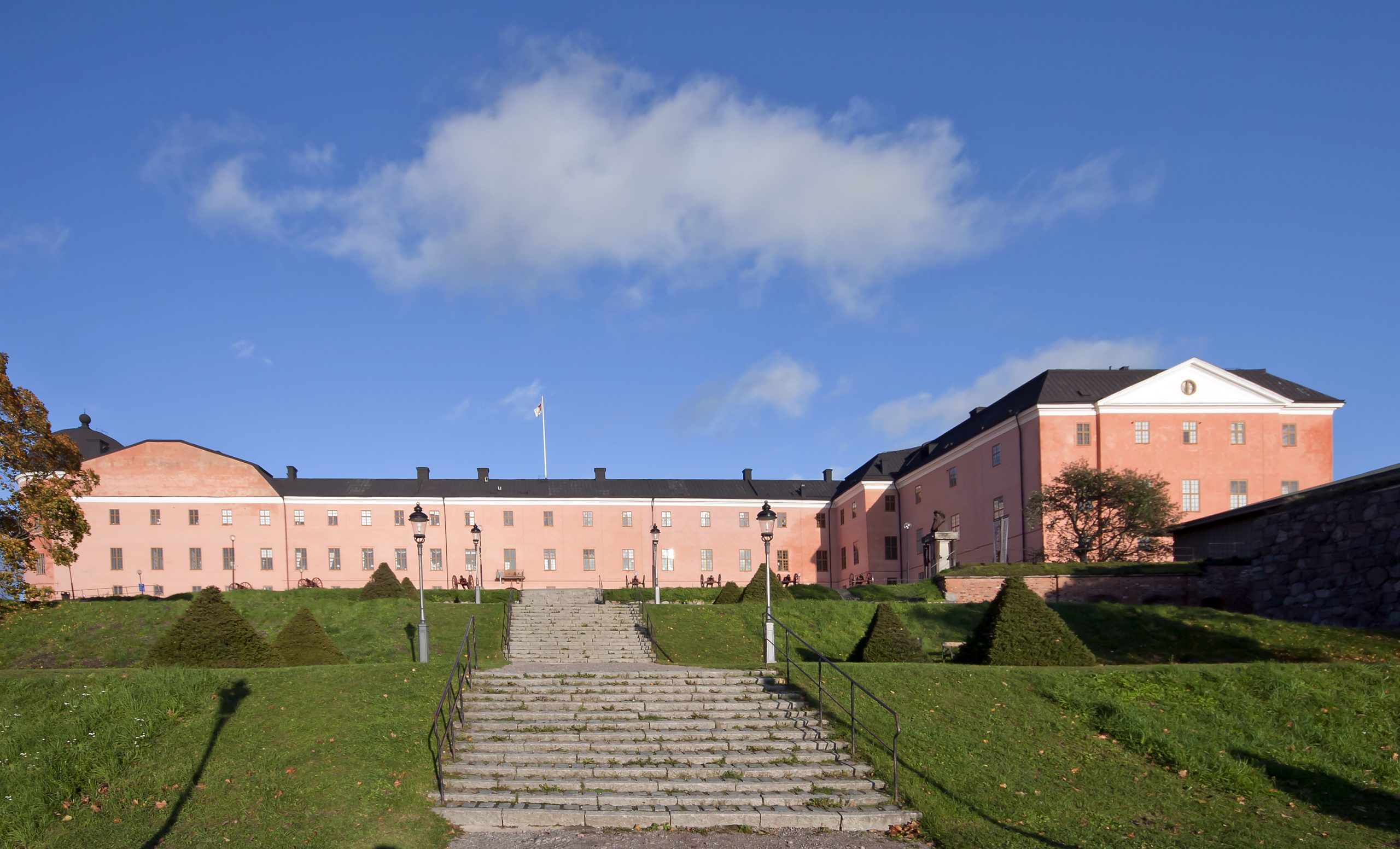
Uppsala Castle
Uppsala Castle, where Hammarskjöld spent much of his childhood.
Photo: David Castor / Wikimedia Commons. CC0.
From Uppsala University to public service

At 18, Hammarskjöld enrolled at Uppsala University, where he pursued an unusually broad course of study spanning literature, philosophy, economics and law. He went on to earn degrees in law and economics, later completing a doctorate in economics at Stockholm University and briefly teaching political economy.

His professional life began not in diplomacy, but in the machinery of the Swedish state. In 1930, he found himself at the center of one of the country’s most pressing policy challenges when he joined a government committee studying unemployment during the economic depression.

From there, his rise through public administration was rapid. He moved into the Ministry of Finance, and by 31 had become Permanent Under-Secretary. He later chaired the board of Sweden’s central bank and played a significant role in the country’s economic negotiations during and after the Second World War.

Hammarskjöld never joined a political party. His career was built instead on the Swedish tradition of an independent civil service, with a reputation for technical expertise, discretion and institutional loyalty.

From Stockholm to international diplomacy

By the late 1940s, Hammarskjöld’s work was becoming increasingly international.

He joined Sweden’s Foreign Ministry in 1947 and later became its Secretary-General. In that role, he represented Sweden in international economic discussions and served on Swedish delegations to the United Nations.

By 1951, he had entered the government as a cabinet minister, focusing primarily on international economic policy and foreign affairs.

It was this combination of economic expertise, diplomatic experience and political independence that brought him to the attention of the United Nations two years later.

An unexpected Secretary-General

In 1953, the United Nations found itself searching for a new Secretary-General at a difficult moment in the Cold War.

The major powers struggled to agree on a candidate, and several candidates had failed to win sufficient support. Hammarskjöld eventually emerged as a compromise candidate acceptable to the Security Council.

On April 7, 1953, the General Assembly unanimously appointed him Secretary-General. He formally took office three days later, at the age of 47.

Over the next eight years, Hammarskjöld would not simply occupy the office of Secretary-General. He would help define it.

Expanding the role of the Secretary-General

When Hammarskjöld arrived in New York, the United Nations was only eight years old. Its institutions existed, but many of their conventions and boundaries were still being established.

Hammarskjöld believed the Secretary-General should be more than the organization’s chief administrator. In his view, the office carried an independent diplomatic responsibility under the UN Charter, including the ability to mediate disputes, undertake sensitive missions and intervene before crises escalated.

That interpretation became one of the defining features of his tenure.

He was involved in negotiations over American airmen detained in China, and played an important diplomatic role during the Suez Crisis of 1956.

The Suez crisis also became a turning point in the development of modern peacekeeping. Under Hammarskjöld’s leadership, the United Nations deployed the United Nations Emergency Force to supervise the withdrawal of foreign troops from Egypt, helping establish a model that would later become central to UN operations around the world.

He also advanced the concept of “preventive diplomacy”: using mediation, negotiation, and an international presence to contain disputes before they became larger conflicts.

The approach increased the influence and independence of the Secretary-General’s office, but it was not universally welcomed. Governments that preferred a more limited role for the UN sometimes viewed Hammarskjöld’s interpretation of the position with suspicion.

Even so, his standing within the organization remained strong. In 1957, he was unanimously appointed to a second five-year term. UN archival records document his two terms and the major international crises that shaped them.

The private life behind the public office

Hammarskjöld’s public image was one of discipline and reserve, but his interests extended far beyond diplomacy. He was deeply engaged with literature, philosophy, photography, and the natural world. He was also an accomplished mountaineer and frequent traveler.

In 1954, he was elected to the Swedish Academy, succeeding his father in the same seat.

He maintained a private journal for much of his adult life. Published after his death as Vägmärken, Markings in English. It revealed a more introspective side of a man otherwise known for his restraint. The entries touch on faith, responsibility, ambition, solitude, and the demands of public service. The book has since become one of the most enduring works associated with him.

The Congo crisis

The most difficult and consequential period of Hammarskjöld’s tenure began in 1960.

The Belgian Congo gained independence in June of that year, but the transition was followed almost immediately by military unrest, political instability and the secession of the mineral-rich province of Katanga. The Congolese government appealed to the United Nations for assistance.

What followed became one of the most ambitious and complicated operations the organization had yet attempted. UN troops were deployed, diplomatic missions intensified, and Hammarskjöld traveled repeatedly to Africa as the crisis deepened.

The conflict was never simply domestic. Cold War rivalries, foreign commercial interests, and competing ideas about the limits of international intervention all became entangled in the crisis.

By September 1961, fighting between UN forces and Katangese troops had intensified. Hammarskjöld decided to meet Katanga’s leader, Moïse Tshombe, in an effort to secure a ceasefire.

It would be his final diplomatic mission.

The flight to Ndola

On the evening of September 17, 1961, Hammarskjöld departed Léopoldville, now Kinshasa, aboard a UN-chartered DC-6 known as the Albertina.

The aircraft was bound for Ndola, then in Northern Rhodesia and today part of Zambia.

It never reached its destination.

Shortly after midnight on September 18, the plane crashed near Ndola. Hammarskjöld and the other 15 people on board eventually died.

He was 56 years old.

The cause of the crash has never been conclusively established.

Early investigations considered pilot error among the possible explanations, but later witness testimony and newly examined evidence raised questions about whether the aircraft may have been attacked or otherwise deliberately brought down.

The United Nations has returned to the case repeatedly over the decades, and the circumstances surrounding Hammarskjöld’s death remain the subject of continuing investigation and historical debate.

The Nobel Peace Prize

A month after the crash that took his life, the Norwegian Nobel Committee announced that Hammarskjöld had been awarded the 1961 Nobel Peace Prize.

The award recognized his work as Secretary-General and his efforts to strengthen the United Nations as an institution for international peace and diplomacy. The Nobel Prize’s biographical record traces the career that led to the honor.

Hammarskjöld received the prize posthumously, making him one of the relatively few recipients in Nobel history to be honored after his death.

A lasting influence on the United Nations

Hammarskjöld served as Secretary-General for just over eight years, but the institutional changes associated with his tenure proved lasting.

He strengthened the independence of the UN Secretariat, expanded the diplomatic authority of the Secretary-General, and helped establish peacekeeping as one of the organization’s defining functions.

Several practices now regarded as central to the modern United Nations took shape or gained prominence under his leadership.

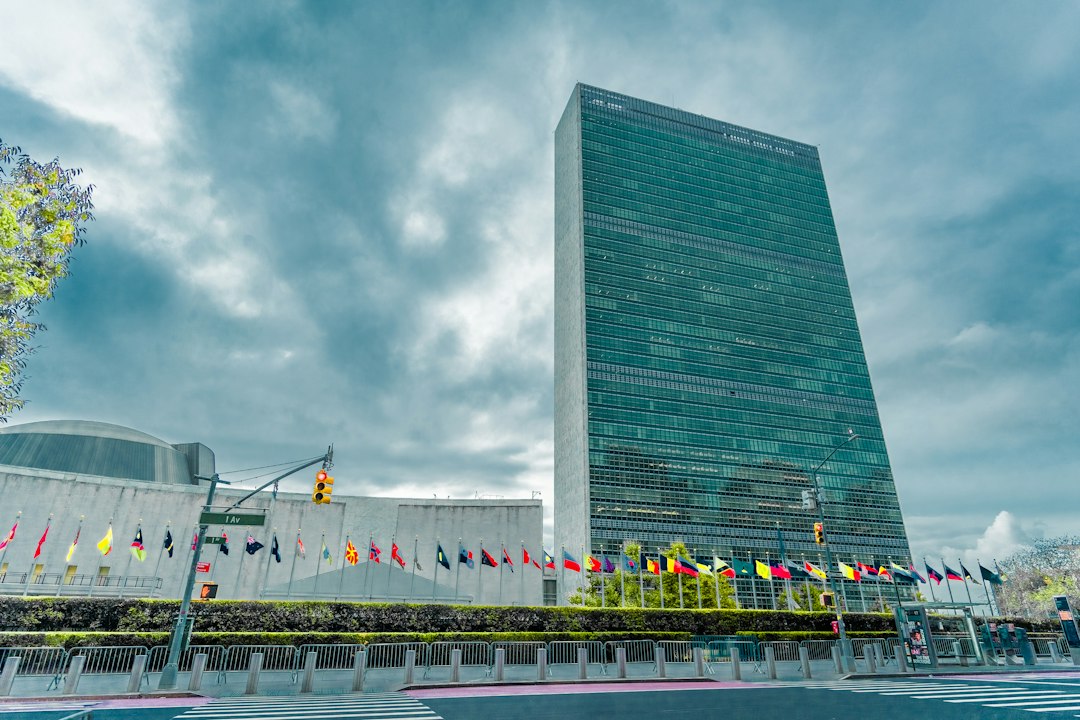
His influence is still visible in the institution today, not only in the traditions of the office he helped shape, but in the physical landscape of the UN itself. The Dag Hammarskjöld Library at United Nations headquarters in New York bears his name, as do streets, buildings, foundations, and public institutions in several countries.

United Nations headquarters in New York City
United Nations Headquarters in New York City. Photo: Nils Huenerfuerst / Unsplash.

In Sweden, he remains one of the country’s most internationally significant public servants. His career took him from economic policy and government administration in Stockholm to the highest levels of international diplomacy, while his final mission in Africa reflected the direct, hands-on approach that had come to define his tenure as Secretary-General.

Sixty-five years after his death, Hammarskjöld remains an important figure in both Swedish diplomatic history and the development of the modern United Nations.


Featured image: Dag Hammarskjöld outside the United Nations headquarters in 1953. Credit: UN/DPI via Wikimedia Commons. The copyright holder permits reuse, including commercial use, with attribution.

Additional image: Uppsala Castle by David Castor, via Wikimedia Commons, CC0 1.0. United Nations Headquarters photo by Nils Huenerfuerst via Unsplash.

LEAVE A REPLY

Please enter your comment!
Please enter your name here

Privacy Overview

This website uses cookies so that we can provide you with the best user experience possible. Cookie information is stored in your browser and performs functions such as recognising you when you return to our website and helping our team to understand which sections of the website you find most interesting and useful.